Modelling ageing in human neural systems
Ageing changes the behaviour of neurons, glial cells and vascular cells and alters the way these populations respond to stress and inflammation. Understanding these changes requires experimental systems that capture human cell biology while allowing specific mechanisms to be manipulated.
Our lab develops iPSC-derived neural models to study cellular ageing and senescence, including how these states influence communication among neurons and non-neuronal cells.
- Cellular senescence in human neural cell populations
- Human iPSC-derived models of brain ageing
- Neuroimmune and glial interactions in disease-associated stress
- Multicellular organoid and assembloid models
- Mechanisms relevant to Alzheimer's disease and related neurodegenerative conditions
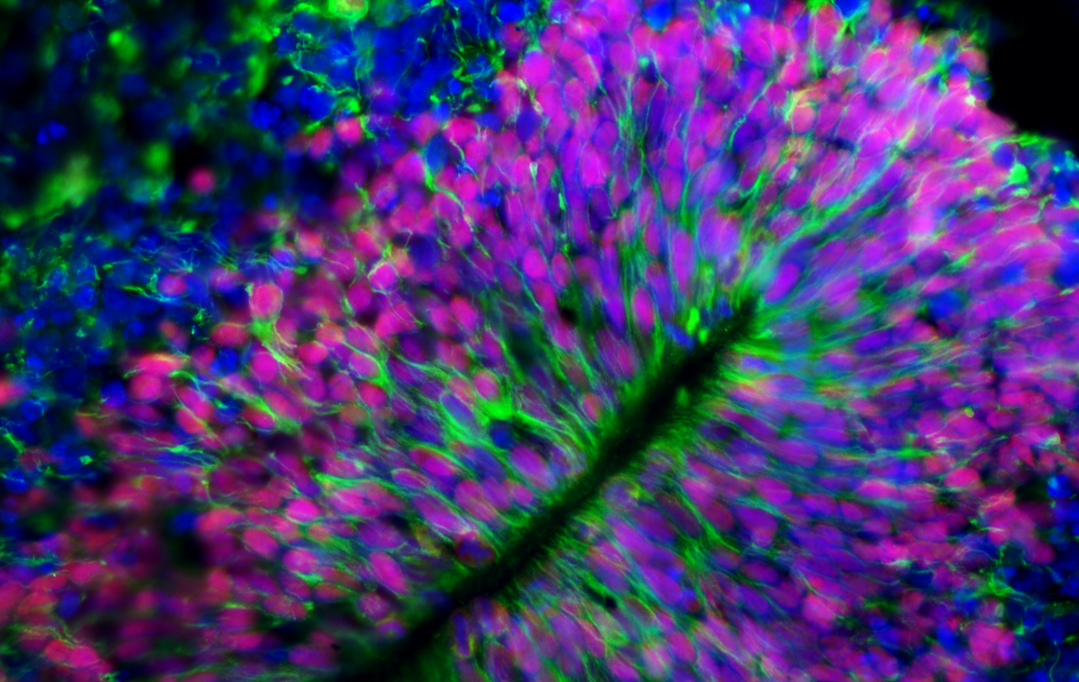
Human 3D cultures allow disease-associated mechanisms to be studied in a multicellular neural environment.
Cellular interactions
Beyond neurons alone
Neurodegenerative disease involves more than neuronal loss. Microglia, astrocytes and vascular cells can influence inflammatory signalling, tissue homeostasis and neuronal survival. We therefore aim to develop models that include multiple interacting cell populations rather than studying each cell type in isolation.
These systems can be used to test how ageing-associated changes alter susceptibility to disease-related stress and to identify mechanisms that may be amenable to intervention.
Related research