What we study

Research

We investigate how the human brain develops, how neural stem cells generate organised tissue, and how inflammatory and disease-associated signals alter these processes. Our work combines human tissue with organoids, cerebroids and multicellular assembloids.

01

Neural stem cells & neurogenesis

We study neural stem cell identity and lineage progression during cortical and hippocampal development, including the developmental origins of neural stem cells that persist into adult life.

Explore neural stem cell research
02

Human brain organoids & 3D models

We develop human organoids, cerebroids and assembloids to model cortical and hippocampal development and to incorporate cell types such as microglia and vascular cells.

Explore our 3D brain models
03

Maternal inflammation & IL-17A

We investigate how inflammatory signals associated with maternal immune activation influence neural stem cells, neurogenesis and the organisation of the developing human cortex.

Explore maternal inflammation research
04

Brain ageing & neurodegeneration

We use human iPSC-derived neural cells, organoids and multicellular models to investigate cellular senescence, neuroimmune interactions and mechanisms relevant to Alzheimer's disease and other neurodegenerative conditions.

Explore ageing and neurodegeneration research

How we work

Human experimental neuroscience

Our research brings together developmental neurobiology, stem cell biology and human experimental models. We use human fetal tissue where appropriate alongside stem cell-derived systems that allow developmental mechanisms to be tested experimentally.

Methods used across the lab include high-resolution imaging and histology, pharmacological and cytokine perturbation, single-cell transcriptomics, spatial RNA analysis and functional measurements in 3D cultures.

These approaches let us connect molecular and cellular mechanisms with tissue-level organisation, from neural stem cell behaviour to cortical architecture and interactions among neural, immune and vascular cell types.
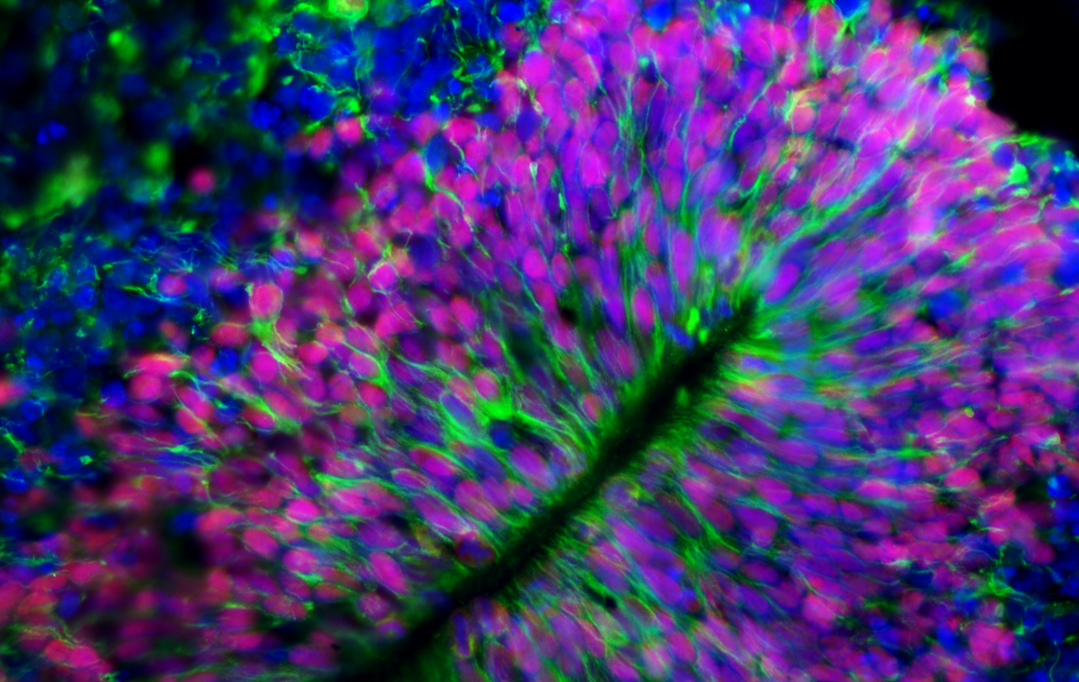
Human cortical organoid labelled for neural stem cell markers nestin and SOX2

Human 3D neural tissue provides an experimental bridge between molecular mechanisms and developing tissue organisation.

Selected work

Recent research highlights